
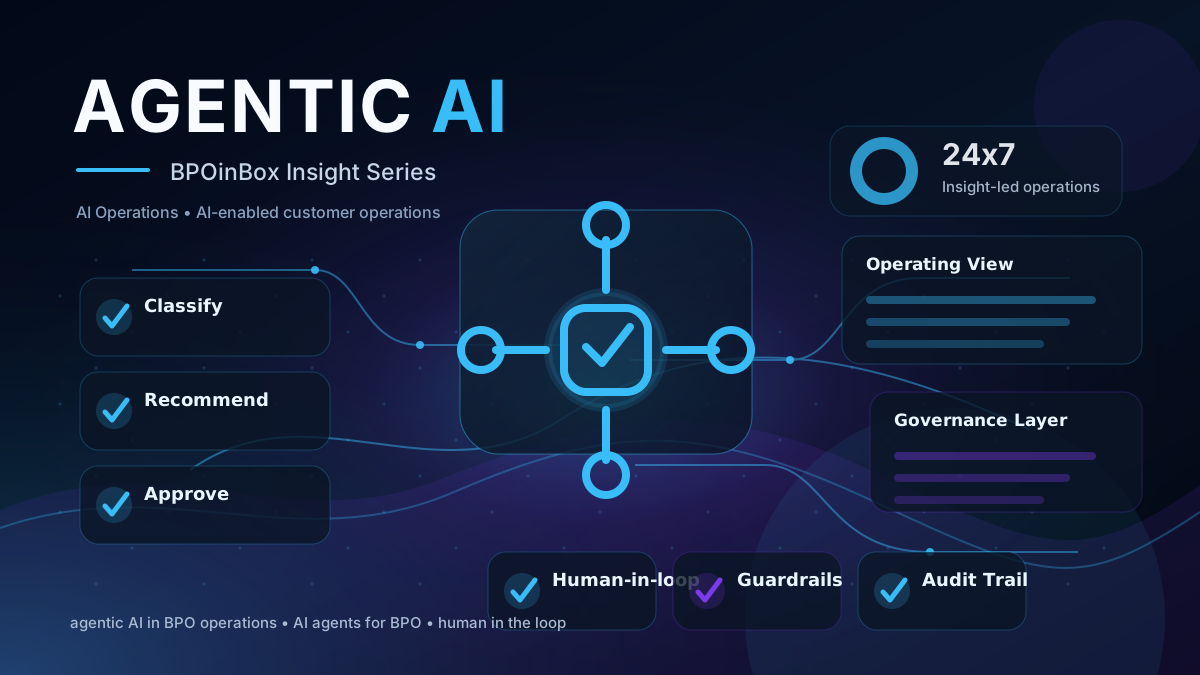
A balanced guide to using agentic AI for planning, routing, summarizing and follow-up while protecting trust, compliance and customer experience.
- Start with a bounded process and clear baseline metrics before scaling.
- Use AI to improve speed, consistency and guidance without removing human judgment from sensitive decisions.
- Connect the topic to SLA, QA, knowledge, analytics and governance routines.
AI pilots often remain stuck at script generation or FAQ bots, while real BPO operations need controlled action across tasks, queues, documents and customer follow-ups.
The responsible question is not whether AI agents can act; it is where they should act, under what guardrails and with what human review thresholds.
The core issue
Enterprises are under pressure to improve customer experience while controlling cost, reducing operational leakage and maintaining service discipline across channels. This is where a packaged BPO operating model becomes valuable.
AI pilots often remain stuck at script generation or FAQ bots, while real BPO operations need controlled action across tasks, queues, documents and customer follow-ups.
What good looks like
Agentic workflows work best when broken into small accountable steps: classify, retrieve, recommend, draft, trigger, monitor and escalate.
A mature program defines ownership, escalation, quality checks, knowledge controls and management reporting before volume starts moving. It avoids the trap of launching tools first and process discipline later.
Relevant use cases
- Email triage
- Call summarization
- Ticket routing
- Knowledge recommendations
- Follow-up reminders
Technology and operating design
The stack should include intent detection, workflow rules, knowledge retrieval, action permissions, human approval points and complete audit logs for AI-assisted decisions.
| People | Role clarity, training, supervised escalation and continuous coaching. |
| Process | SOPs, categorization, handoffs, SLA rules, quality controls and audit trails. |
| Platform | Omnichannel queues, CRM, automation, analytics, knowledge and workflow orchestration. |
| Governance | Daily dashboards, weekly reviews, risk logs, change control and executive visibility. |
Governance and KPIs
AI governance must define allowed actions, confidence thresholds, exception handling, model monitoring, data retention and review cycles for prompts and knowledge content.
Governance is where many customer-operation programs either mature or drift. A weekly review should not only ask whether the SLA was met; it should ask what is changing, what is recurring and what needs redesign.
Metrics to track
- Automation assist rate
- Human override rate
- AI recommendation acceptance
- Error leakage
- Cycle time reduction
- Audit exceptions
Pitfalls to avoid
- Giving AI open-ended authority
- Skipping explainability
- Training agents to blindly accept suggestions
- Ignoring prompt and knowledge governance
How BPOinBox helps
BPOinBox should use agentic AI as a disciplined co-worker: planning routine next steps, reducing supervisor load and keeping humans accountable for exceptions and sensitive decisions.
The value of a packaged model is that it compresses the journey from idea to execution. Instead of separately designing people, process, tools, reporting and governance, the enterprise can start with a ready operating blueprint and adapt it to the process context.
This article is part of the BPOinBox Insight Series for CX, BPO, digital transformation and customer operations leaders evaluating practical AI-enabled operating models.
Planning a customer operations transformation?
BPOinBox can be positioned as a modular operating layer for enterprises that need AI-enabled scale, omnichannel coverage and management visibility.
Request a walkthroughFAQs
Why is agentic AI in BPO operations important for modern customer operations?
It matters because customer operations now need faster response, better consistency, clearer governance and measurable outcomes across channels. The leadership question is whether the operating model can be launched, governed and improved like a digital product.
Where should an enterprise begin?
Start by mapping current demand, top intents, workflow gaps, data risks and the KPIs that leadership already reviews. Then pilot a contained use case before scaling.
How does BPOinBox fit into this journey?
BPOinBox should use agentic AI as a disciplined co-worker: planning routine next steps, reducing supervisor load and keeping humans accountable for exceptions and sensitive decisions.