
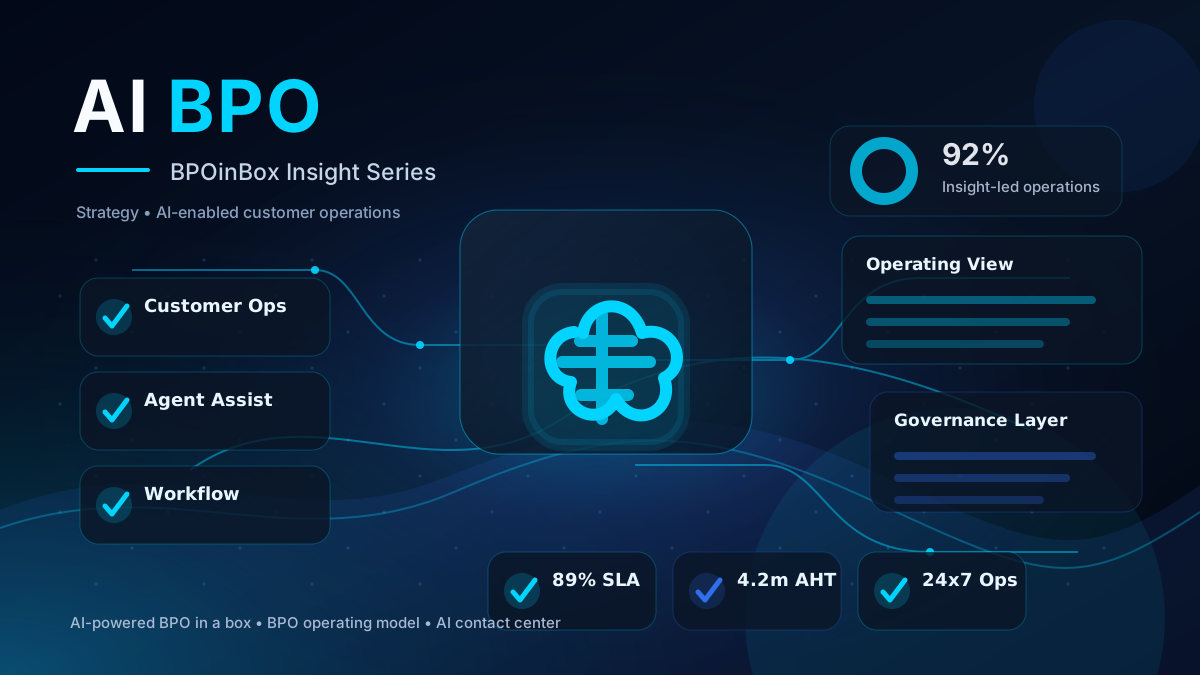
A practical view of how packaged people, process, platform and governance can help enterprises launch modern BPO operations faster and with more control.
- Start with a bounded process and clear baseline metrics before scaling.
- Use AI to improve speed, consistency and guidance without removing human judgment from sensitive decisions.
- Connect the topic to SLA, QA, knowledge, analytics and governance routines.
Many enterprises want the speed of outsourcing but not the loss of control that can come with fragmented vendors, isolated tools and poorly documented workflows.
The leadership question is no longer whether to outsource; it is whether the outsourced operating model can be launched, governed and improved like a digital product.
The core issue
Enterprises are under pressure to improve customer experience while controlling cost, reducing operational leakage and maintaining service discipline across channels. This is where a packaged BPO operating model becomes valuable.
Many enterprises want the speed of outsourcing but not the loss of control that can come with fragmented vendors, isolated tools and poorly documented workflows.
What good looks like
A BPO-in-a-box model treats the operation as a ready stack: process maps, trained agents, AI assist, omnichannel queues, escalation rules, reporting and continuous improvement rituals.
A mature program defines ownership, escalation, quality checks, knowledge controls and management reporting before volume starts moving. It avoids the trap of launching tools first and process discipline later.
Relevant use cases
- Customer service pods
- Application support desks
- Digital sales support
- Complaint management
- Back-office triage
Technology and operating design
The technology layer should combine CRM, telephony, digital channels, knowledge, analytics and workflow automation instead of forcing agents to jump across disconnected screens.
| People | Role clarity, training, supervised escalation and continuous coaching. |
| Process | SOPs, categorization, handoffs, SLA rules, quality controls and audit trails. |
| Platform | Omnichannel queues, CRM, automation, analytics, knowledge and workflow orchestration. |
| Governance | Daily dashboards, weekly reviews, risk logs, change control and executive visibility. |
Governance and KPIs
Governance must include SLA baselines, data controls, quality reviews, change logs, knowledge approvals and executive dashboards from the first day of service.
Governance is where many customer-operation programs either mature or drift. A weekly review should not only ask whether the SLA was met; it should ask what is changing, what is recurring and what needs redesign.
Metrics to track
- First contact resolution
- Average handling time
- SLA adherence
- Cost per interaction
- Quality score
- Escalation ageing
Pitfalls to avoid
- Treating AI as a chatbot add-on
- Launching without documented SOPs
- Ignoring data privacy design
- Measuring only volume instead of outcomes
How BPOinBox helps
BPOinBox positions the contact center as a packaged execution layer: AI where it improves speed and consistency, humans where judgment, empathy and escalation discipline matter.
The value of a packaged model is that it compresses the journey from idea to execution. Instead of separately designing people, process, tools, reporting and governance, the enterprise can start with a ready operating blueprint and adapt it to the process context.
This article is part of the BPOinBox Insight Series for CX, BPO, digital transformation and customer operations leaders evaluating practical AI-enabled operating models.
Planning a customer operations transformation?
BPOinBox can be positioned as a modular operating layer for enterprises that need AI-enabled scale, omnichannel coverage and management visibility.
Request a walkthroughFAQs
Why is AI-powered BPO in a box important for modern customer operations?
It matters because customer operations now need faster response, better consistency, clearer governance and measurable outcomes across channels. The leadership question is whether the operating model can be launched, governed and improved like a digital product.
Where should an enterprise begin?
Start by mapping current demand, top intents, workflow gaps, data risks and the KPIs that leadership already reviews. Then pilot a contained use case before scaling.
How does BPOinBox fit into this journey?
BPOinBox positions the contact center as a packaged execution layer: AI where it improves speed and consistency, humans where judgment, empathy and escalation discipline matter.